

We may earn money or products from the companies mentioned in this post.
A mat placed beside the front door may look tidy, but it can put a large, eager dog right in the path of arriving visitors. For a settling routine to be workable, the spot needs enough space for the dog to lie down, enough grip to stay put, and enough distance from the threshold to make waiting easier. The mat helps organize practice; it doesn’t replace a gate or a plan for opening the door.
Check the space around it
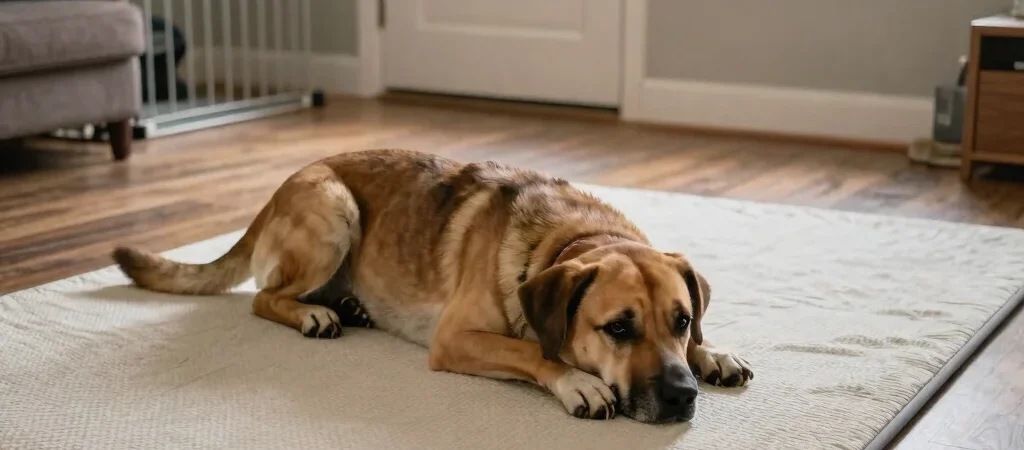
Measure the mat against your dog’s relaxed lying position, not just the neat curl they manage when the room is quiet. Leave room for the dog to step onto it and turn around without landing in a walkway. If your entry is narrow, a spot behind a gate or farther into the living room may be more practical than placing the mat in the greeting zone.
Test the underside on the actual floor: hardwood, tile, and a low-pile rug can each change how a mat moves. Watch for curled edges or sliding when the dog steps on and off, and avoid setups that create a trip hazard for visitors. Check the care label before buying; muddy paws and treat crumbs are ordinary parts of the routine, not unusual accidents.
Build the routine in quiet moments
First reward stepping onto the mat, then staying there briefly, when the house is calm. Add small pieces of the visitor routine one at a time, such as a familiar knock or the door opening a few inches, while someone else manages the barrier. If your dog can’t settle at that difficulty, make the practice easier rather than repeating the same challenging greeting.
Write down what changes
Note the mat’s dimensions, floor surface, whether it shifts, and how long your dog can stay settled during practice. When visitors come, record the distance from the door and what distractions changed the picture. One calm greeting is encouraging, not proof that the routine will hold with every person or level of excitement.