

We may earn money or products from the companies mentioned in this post.
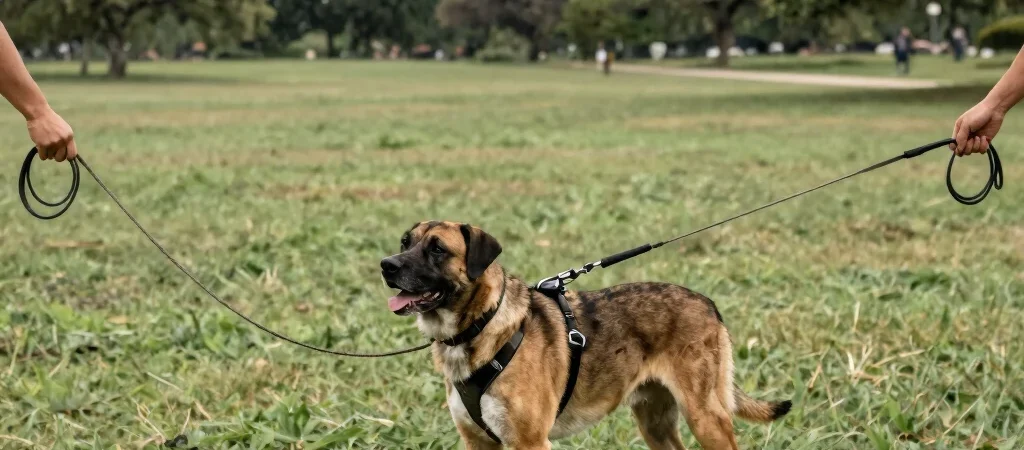
The first time a dog spots a squirrel at the far end of a long line, the line stops being an accessory and becomes part of the training setup. For recall practice, length matters—but so do the surface, the dog’s harness fit, and whether you can manage slack without wrapping it around your hand. The useful line is the one you can handle safely in the place you plan to train.
Match length to the space
A shorter line is often easier to manage in a small yard or a busy park edge, while more length can give a dog room to move in an open, quiet area. Before choosing, picture the actual route: Are there trees, benches, bike paths, or other dogs close by? Check local leash rules, too; a long line isn’t appropriate or permitted everywhere.
Material changes the feel. A webbing line may be easier to pick up off grass, while a biothane-style line can be simpler to wipe down after damp ground; either can drag, snag, or feel different under tension. Compare width, weight, clip size, and the maker’s care instructions rather than assuming that a line advertised for large dogs will suit your hands.
Practice handling before recall
Start in a quiet, open space with the line attached to a well-fitted harness, and let the dog explore while you practice gathering and releasing slack. Keep the line away from your fingers, legs, and other people; don’t wrap it around your hand, and avoid letting it run at speed through your grip. Sudden tension can hurt both dog and handler, so leave enough room to respond without turning the line into a hard stop.
Track more than come-backs
For each session, note the line length, ground conditions, distractions, and how easily you managed slack. Also record whether your dog turned toward you, needed a smaller distance, or was too distracted to respond. A few successful repetitions in a quiet field don’t establish reliable recall around wildlife or traffic; they tell you where the next manageable practice session might begin.