

We may earn money or products from the companies mentioned in this post.
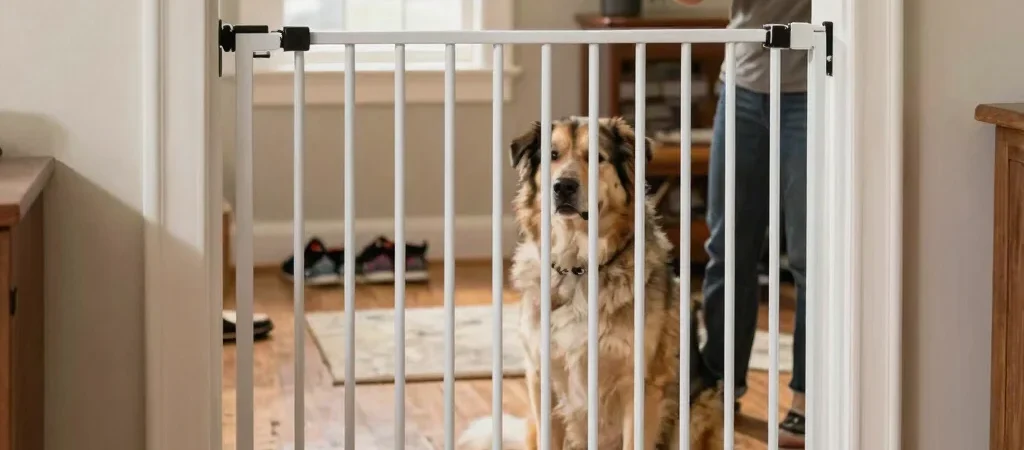
When a large dog launches toward the front door, the first useful question may be about the opening, not the cue you’re repeating. A barrier can keep greetings safer while you work on calmer door behavior, but a poor fit can leave gaps, wobble under pressure, or get in the way of the household. I’d start with a tape measure and a clear-eyed look at how the doorway is used.
Measure the opening you have
Measure the usable width at the top, middle, and bottom; trim, baseboards, and uneven walls can make those numbers differ. Note the narrowest point, the height available, and whether a door needs to swing through the space. Take a photo of the opening and write down where the gate’s pressure pads or mounting hardware would land.
For a big, excitable dog, also consider how the barrier is secured and what happens if the dog leans or jumps against it. A pressure-mounted gate may suit some openings, but it isn’t the right choice for every location or every dog; follow the manufacturer’s installation guidance and use a securely mounted option where the setup calls for one. A gate is a management layer, not a promise that the doorway is now safe.
Make the doorway less exciting
Once the gate is installed, practice when nobody is arriving. With the dog behind the barrier, reward a pause, a glance back, or four paws on the floor; keep the practice short enough that you can end before the dog is repeatedly throwing weight at the gate. Build up ordinary door sounds gradually instead of starting with a full visitor greeting.
Keep notes on the fit
Record the opening measurements, gate height, mounting method, and whether the gate shifts during normal use. Then note what your dog actually does when the door opens: stays back, paws at the barrier, or finds a gap. One doorway and one dog can’t tell you how a gate will perform elsewhere, but those notes can show whether your setup needs adjustment before you add more training.