

Start here
Three steps for a calmer doorway, a steadier recall, and quieter arrivals
A practical starting sequence for large, excitable family dogs: boundaries at the threshold, a long-line recall you can keep safe, and a mat routine for when visitors come in. No shock collars, and no promised overnight results.
Core protocols
Door rushing, recall, and visitor settling, in order
Work through each stage in sequence. Each one builds on the boundary before it, and each lists the equipment you need and the points where progress usually stalls.
Stage 01
Stop door rushing at the threshold
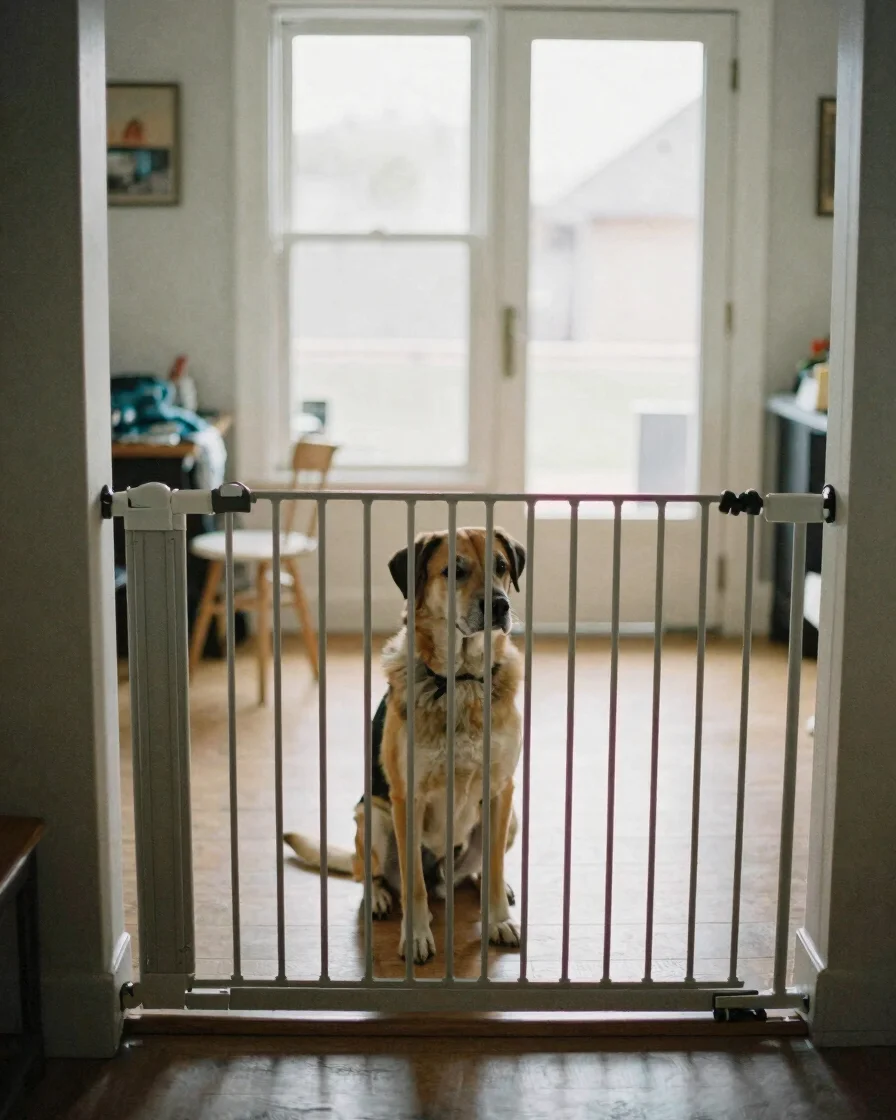
Fit a gate so it sits square in the doorway, then reward the dog for waiting several feet back. Equipment: a pressure-fit or hardware-mounted gate measured to the opening. Stall point: gates that flex or leave a gap at the floor.
Stage 02
Build recall with a long line
Start in a fenced yard with a line sized to the space. Add distance in small steps, keeping the lead loose. Equipment: a line long enough for your yard, with a comfortable handle. Stall point: tension on the lead that teaches the dog to pull away.
Stage 03
Settle on a mat when visitors arrive
Set a training mat near the entry before the doorbell. Reward calm lying down, and move away from the mat as soon as the dog is settled. Equipment: a non-slip mat with grip you can clean. Stall point: a mat that slides or collects debris.
Putting it together
A predictable entryway routine
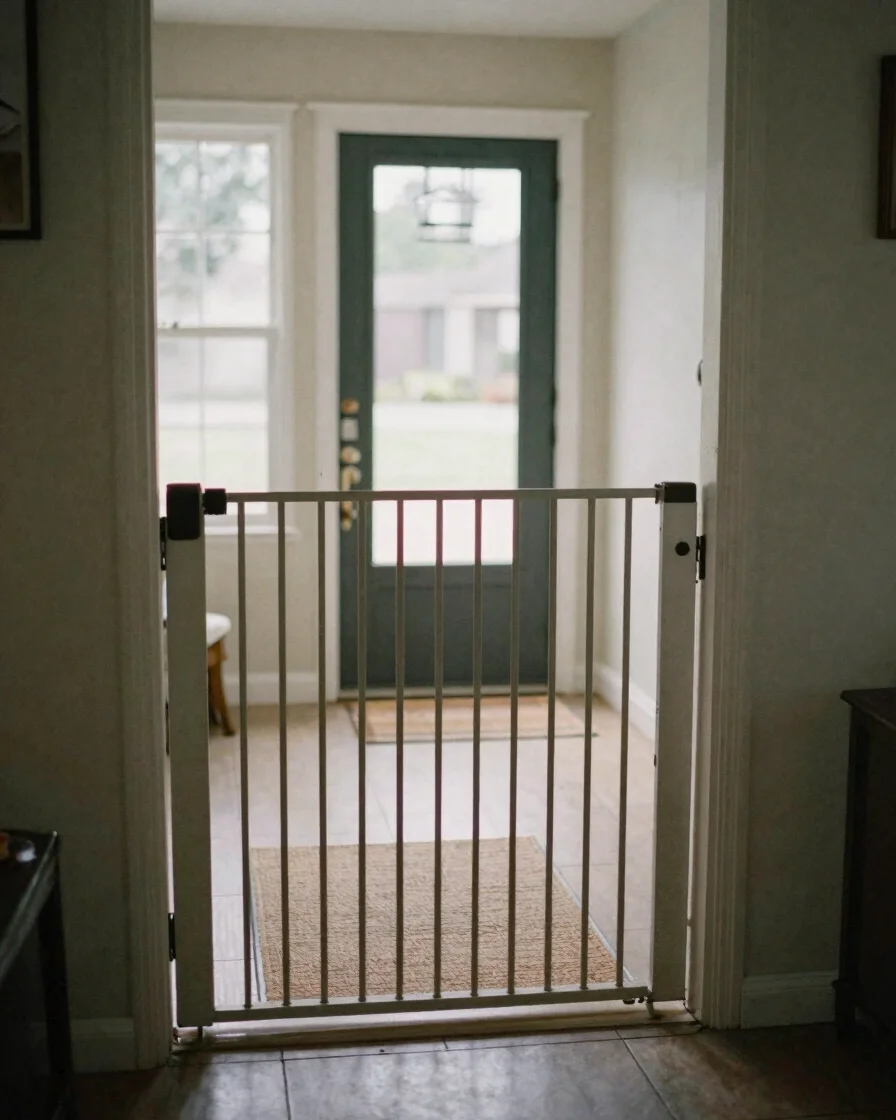
Physical stationing, a visual barrier, and reinforcement for calm behaviour work best together. Set the gate, place the mat, and keep the lead ready so the dog learns where to be before the door opens.
Results vary by dog, household, and doorway. Treat this as a starting structure to test and adjust, and note what you observe.